You sell a vape, a disposable, a cart, nicotine or hemp-derived, does not matter which. You build an ad, it looks clean, and Meta rejects it in an hour. So you rewrite it, resubmit, get rejected again, and start to wonder whether the platform is simply closed to you. It is not. Vape and disposable brands run paid social every day. The reason yours keeps dying is that you are fighting the wrong part of the problem. Fix that, and this becomes a solvable, repeatable job.
Why vape ads get rejected in the first place
Start with what Meta actually thinks your product is. It does not read your lab results and it does not care whether you sell nicotine or hemp. Its policy files vape and e-cigarette products under tobacco and related products, which means:
- Vape is restricted, not hard-banned. It sits closer to nicotine than to cocaine in Meta's eyes. That is the good news: restricted means it can run. It is a hurdle, not a wall.
- Enforcement is AI-first, and the classifier is tuned to over-block. It would rather wrongly flag ten legitimate vape brands than let one genuinely prohibited advertiser through.
- The classifier regularly misfires upward. It grabs a restricted vape product and files it under prohibited substances, which is a harder category with a nastier outcome. That misclassification is a flaw in the machine, not a judgement on your business.
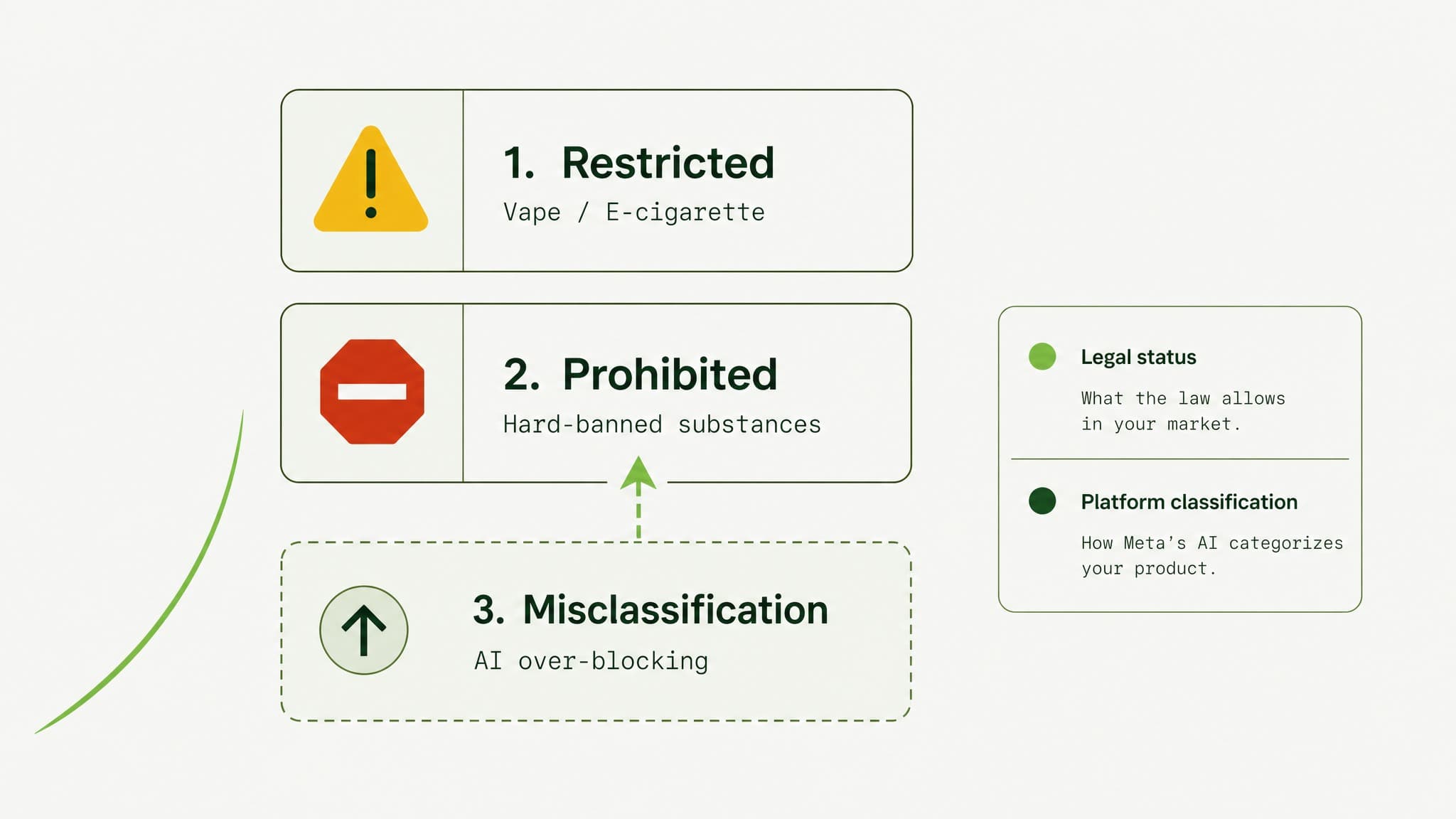
Meta's AI classifier sorts vape into restricted category, but sometimes misfires and upgrades it to prohibited.
Once you see it that way, your job changes completely. You are not trying to prove your product is legal to a system that does not grade on legality. You are trying to not look like the thing the net is built to catch. Those are two different jobs, and only one of them keeps you live. If you want the wider picture of how Meta's detection works across restricted categories, I broke that down in Meta advertising policies for high-risk industries.
The word is the trigger
Here is the part almost nobody tells you. On a vape campaign, the single fastest way to get rejected is to name what you sell. The word does the damage before anyone looks at the offer.
The words and images that get a vape ad pulled, in rough order of how much they hurt:
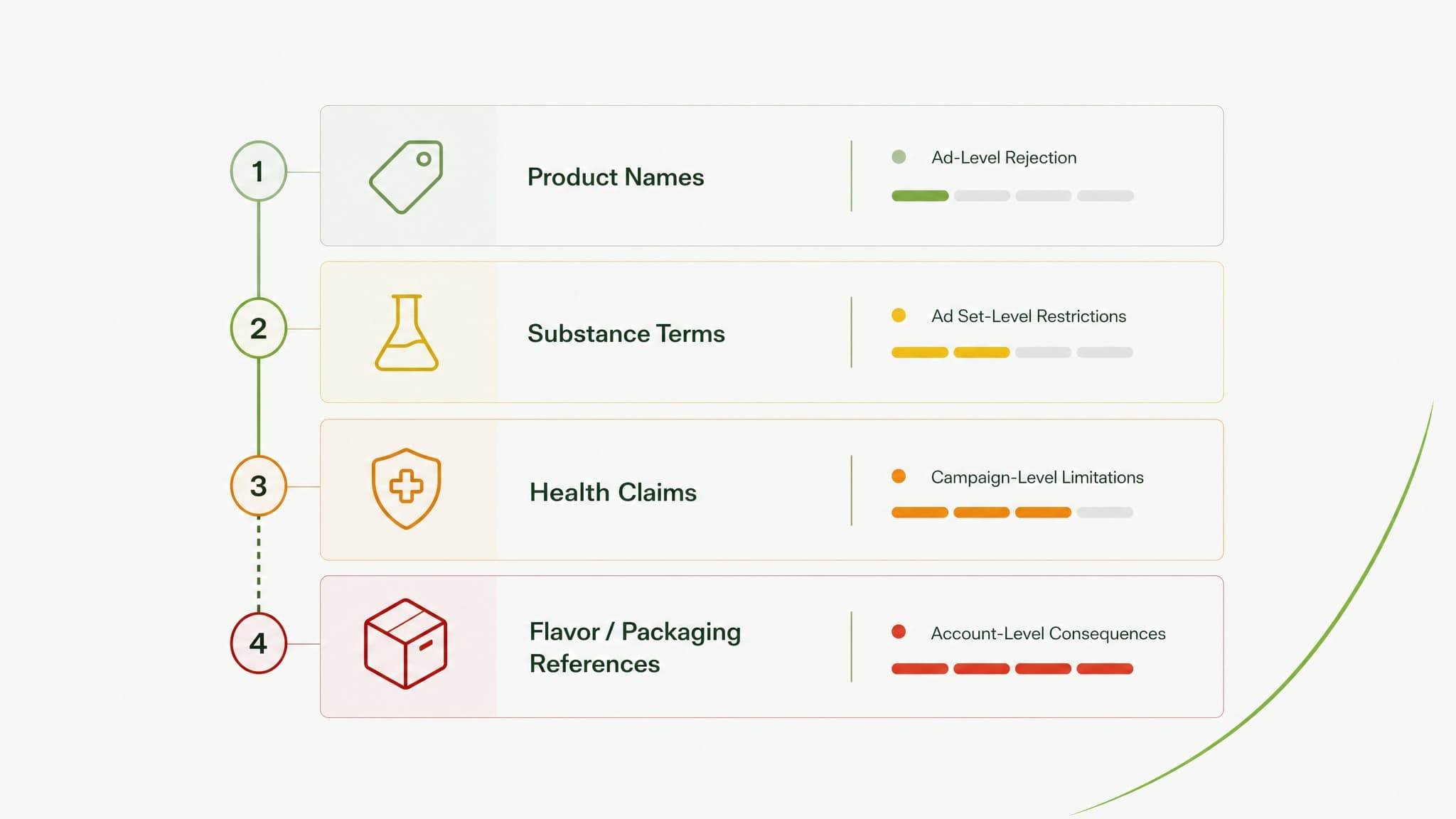
Four categories of language that trigger ad platform rejections, ranked by severity from ad-level to account-level damage.
- "Vape" and "vaping" themselves. The word alone reads as a tobacco signal and disapproves the ad on its own. Operators describe the product as carts, cartridges, or dispos instead, because the review system treats those as a different product type.
- Substance names in copy. THC, THCa, CBD and similar terms are account-killers, not just ad-killers. Drop one of those into a caption and you can lose the whole ad account, not only the single creative it sat on.
- Health and pain claims. Language about relief, calm or symptoms stacks a second violation under health policy on top of the tobacco flag. Now you are fighting two rulebooks at once.
- Flavour references and branded packaging. Named flavours and recognisable branded packaging in the imagery both read as tobacco signals to the classifier.
So the safe move is an ad that sells a feeling, a routine, or a plain offer, and never names the substance or the device. The actual product language lives somewhere else, which we will get to. This is the same trap CBD brands fall into, and I wrote the long version of it in why your CBD ads keep getting rejected.
Why a clean ad still dies
Say you do all that. Clean copy, no trigger words, a soft offer. And the ad still gets pulled, or worse, the account gets flagged. Now you are convinced the platform is broken.
The ad was never the problem. The account underneath it was.

A submarine's sealed compartments mirror how operators segment ad accounts to isolate risk.
It is not broken. You are missing the thing underneath the ad. Meta scores the profile, the ad account, and the business manager behind every single ad with an invisible trust score. You never see a number. There is no meter in the interface. But it is there, and it decides more than your creative does.
Run a perfectly good, perfectly compliant ad from a weak, brand-new account and it gets rejected or flagged anyway. Not because the ad was risky, but because the trust behind it was not there yet. The ad was never the problem. This is why two brands can run near-identical creative and one sails through while the other gets torched. The creative was equal. The accounts were not.
That is also why serious vape operators do not run everything from one account. They spread spend across aged, warmed accounts sitting under multiple business managers, and they segment accounts by product line so a rejection on the vape side cannot take the flower or the accessories down with it. One weak asset can never be allowed to sink the whole business. It is compartmentalisation, the same logic a submarine uses. Seal the sections so one leak does not flood the boat.
Warming a vape account earns the freedom to sell
You do not point a fresh account at your best product-forward creative on day one. You warm it first. This is the step people skip, and skipping it is why their accounts keep dying young.
Here is the shape of a warm-up:
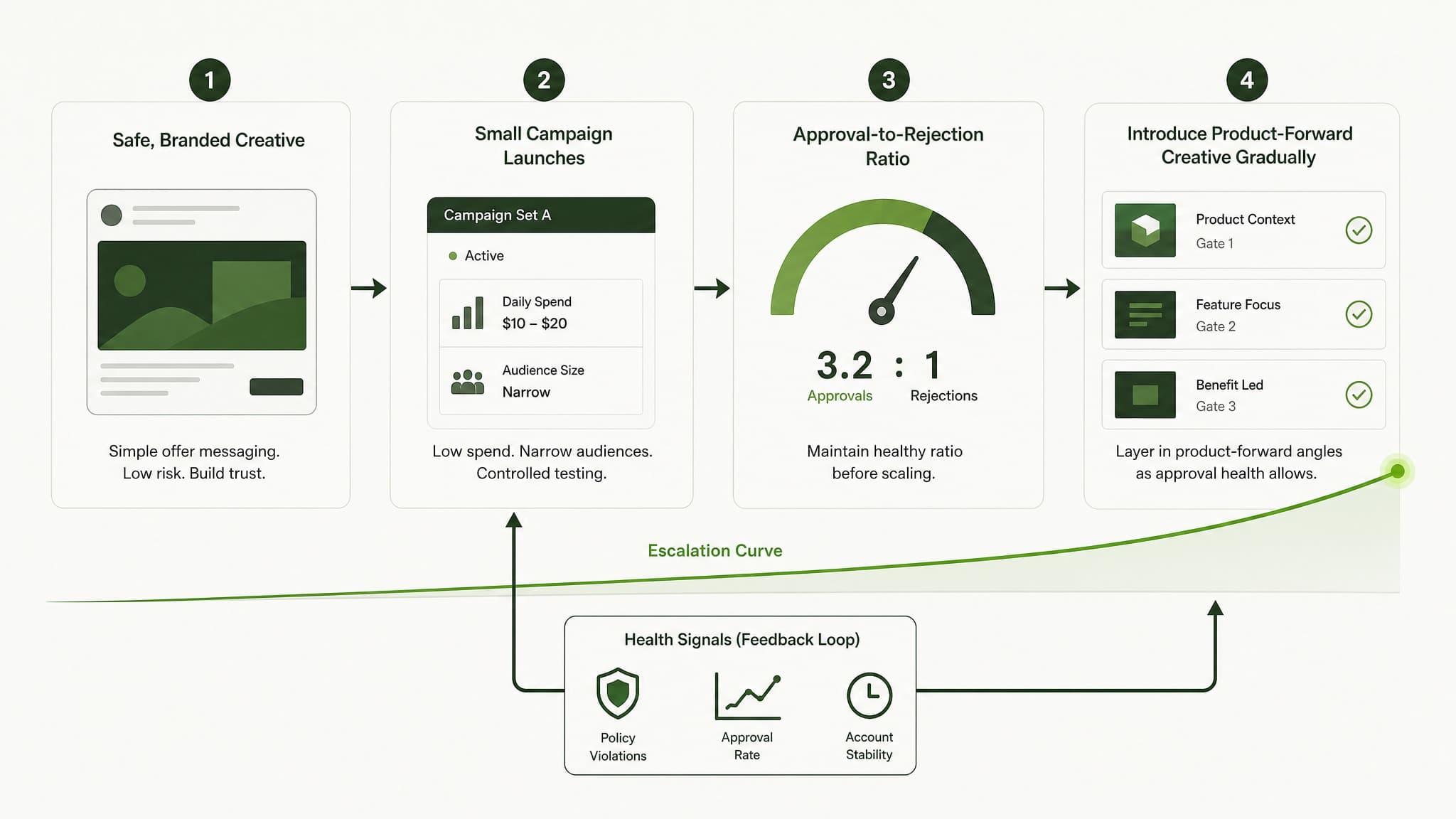
Four stages of account warmup: safe branding, build history, monitor approval ratio, escalate creative gradually.
- Start safe. The first creatives carry client branding, the logo, and a plain offer. Save big today, that kind of thing. No product, no substance language, nothing for the classifier to grab.
- Build a real history. Run one or two small campaigns at low spend so the account establishes a genuine spend record and looks like a real advertiser going about its business.
- Watch the ratio. Meta quietly tracks your approved-to-rejected balance. Keep rejections low, because a pile of them turns the account hypersensitive and previously fine ads start getting pulled.
- Escalate slowly. After a week or two of clean, all-approved running, you introduce more product-forward creative one careful step at a time, keeping each new ad approved before pushing further.
Knowing exactly when to escalate is not a fixed rule you can copy off a page. It is feel, read off the account's health signals by someone who has done it many times. And it runs both ways: if an account is already under pressure and looking unhealthy, the right move is to step down to your safest creative and earn the trust back before you try anything bolder. Getting that read right is most of the craft. If you want the signals we watch, I put them in account health monitoring.
Sanitised, unsanitised, and why video buys you room
Not all vape creative carries the same risk, and experienced teams sort it into tiers rather than guessing ad by ad. The tiers run from fully sanitised, which shows no product and no substance identifiers at all and sells pure lifestyle or offer, up through to unsanitised, which shows far more of the product. The whole point of the warm-up is to earn your way up that ladder without tripping the classifier.
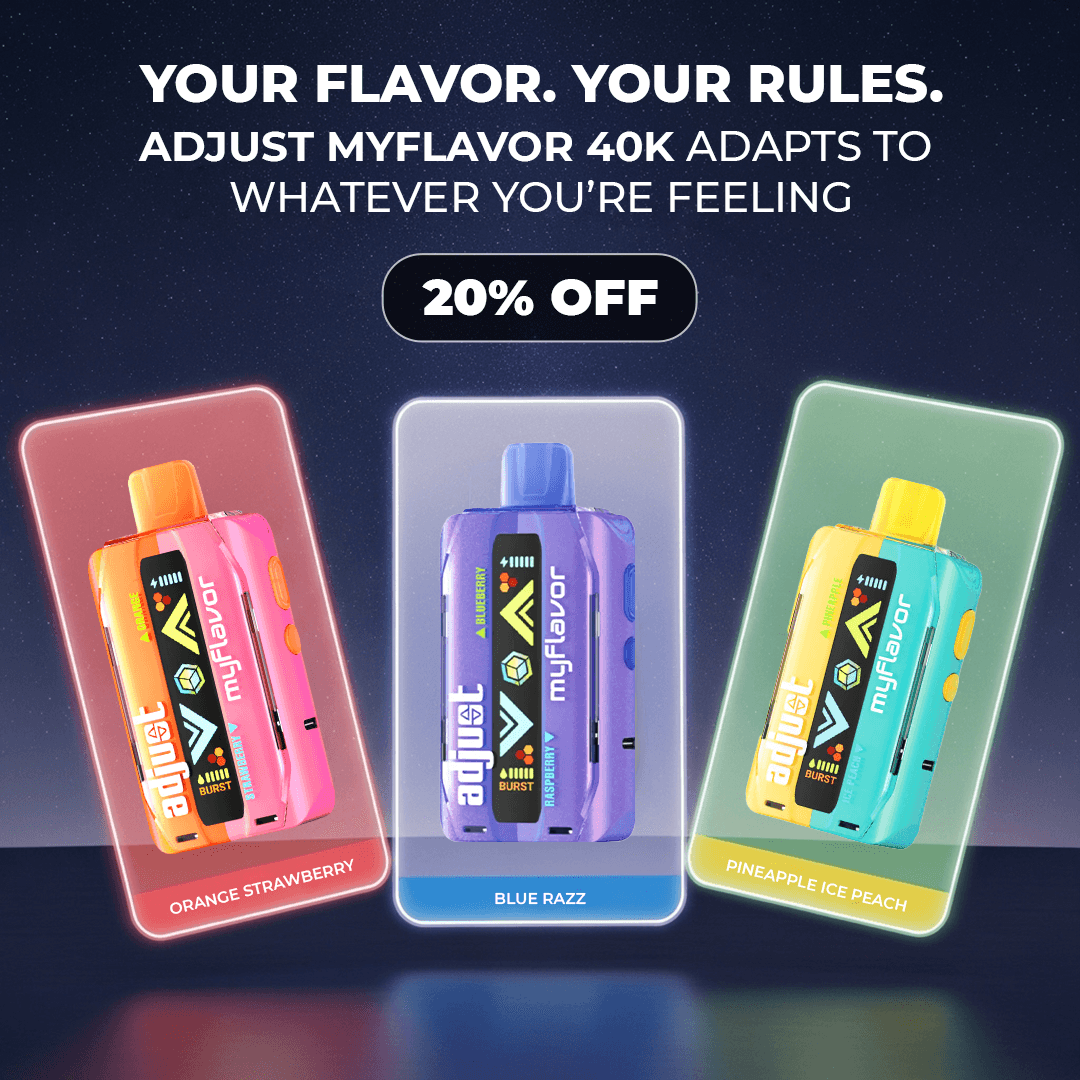

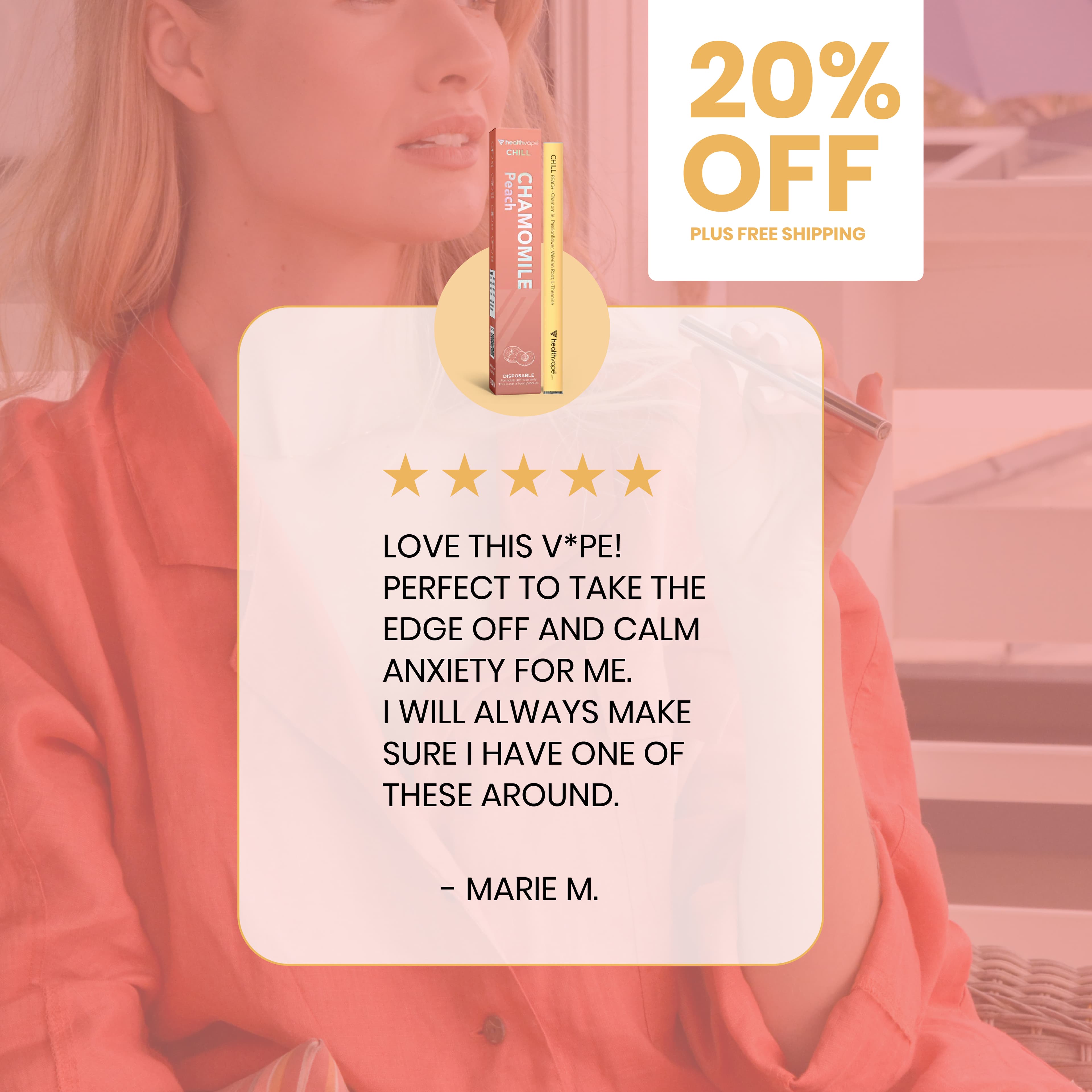
 Live vape ad creatives from real Icarus client campaigns.
A few things worth understanding about the creative itself:
Live vape ad creatives from real Icarus client campaigns.
A few things worth understanding about the creative itself:
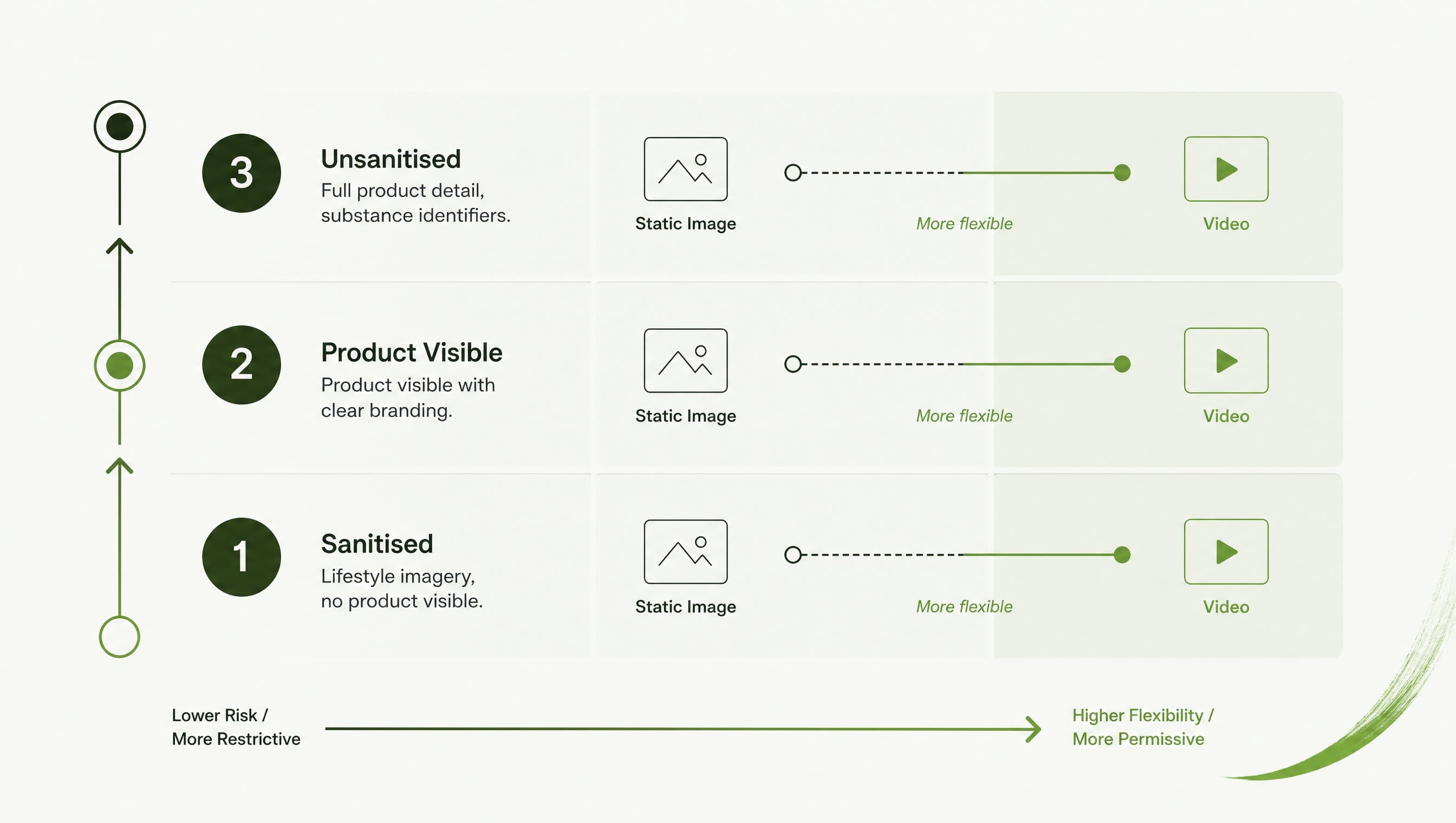
Creative risk tiers from sanitised lifestyle ads up to unsanitised product-focused creative.
- A bold ad is not a reckless ad. A creative can show the product, the brand and the offer clearly to a human buyer while carrying no textual triggers for the machine, precisely because the warmed account underneath it has earned the trust to run it. Boldness comes from the infrastructure, not from being toothless.
- Statics are the workhorse. They are fast and cheap to produce, so they are how you test lots of angles quickly and find what resonates.
- Video gives you more room. Meta's AI finds it harder to read specific things inside a video than inside a static image. A founder talking to camera, a review, a street interview, a plain talking-head, all of these let you show and say more of what your buyer needs to hear while staying under the classifier's radar.
The reason the whole system works is that the two halves do different jobs. The ad's job is to get approved and get the click. It does not have to close anyone.
The destination does the closing
If the ad is deliberately soft, something has to do the actual selling. That is the destination, and it is built to serve two different visitors at once: the automated review that checks the link, and the real human who clicks it. Each sees the page they are meant to see. Automated review meets a clean, compliant page. The buyer lands on the page that actually converts.
A few things stack the odds here:
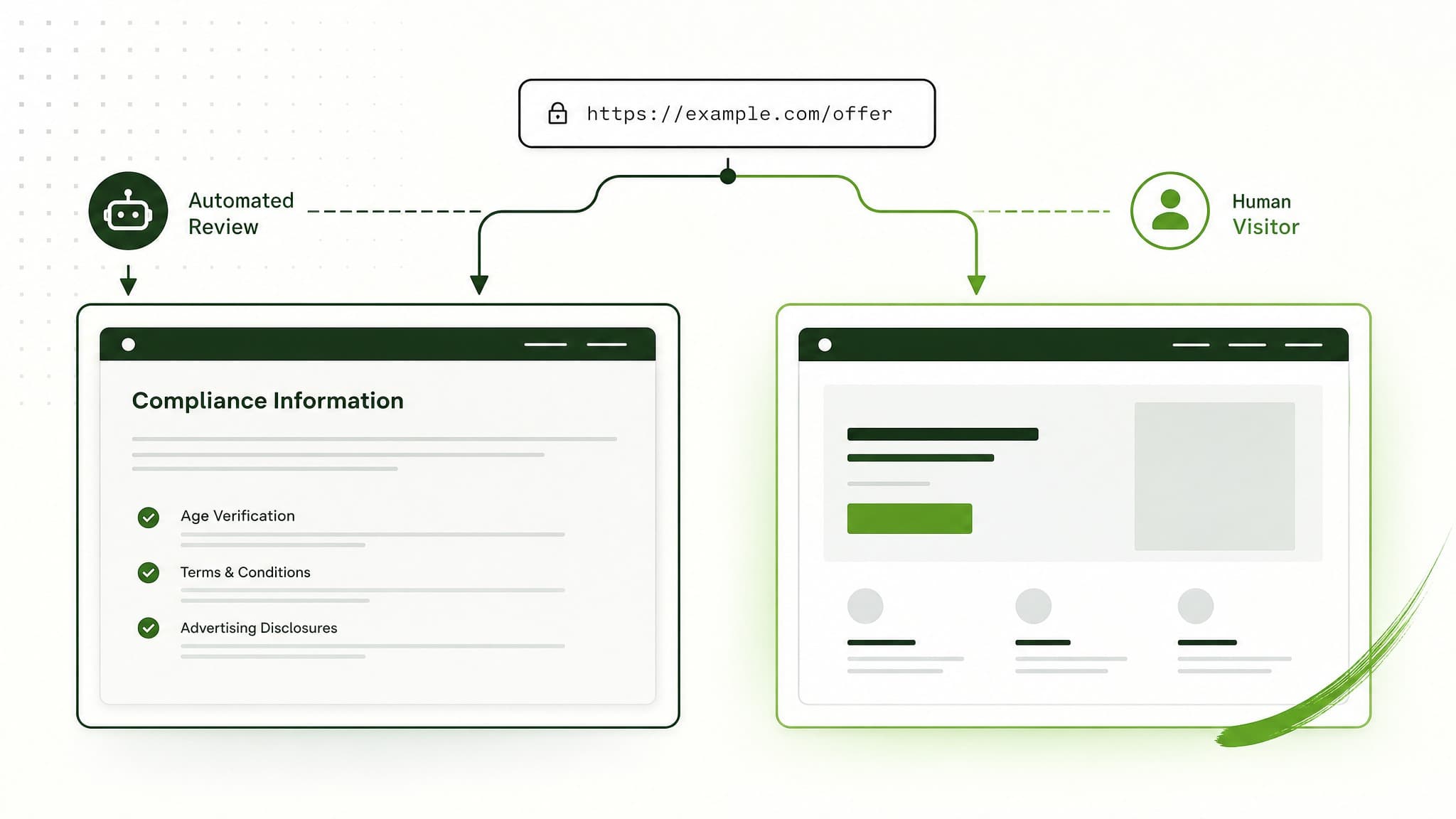
A landing page simultaneously serves compliance review and human buyers through adaptive content delivery.
- An editorial or listicle-style bridge page reads softer to review than a bare storefront, because it frames the product through comparison and content rather than shouting buy now.
- For hemp-derived products, a plain legal compliance line stating the product meets the relevant Farm Bill limits does real work. It signals compliance to the review system and supports you if a ban ever needs challenging as a misclassification.
I am not going to hand you the step-by-step build, because that setup plus ten years of feel is exactly what brands pay us to run instead of doing it themselves. But the principle is the important part: the ad earns the click, the page earns the sale, and treating them as one thing is why most people's funnels leak. The full version is in building compliant landing pages.
Read the numbers like an operator
Last thing, because it is where good vape brands still talk themselves out of a winning campaign. You launch, the platform dashboard shows a front-end ROAS below break-even, and you panic.
Front-end ROAS is the price you paid for a customer, not a verdict on the business.
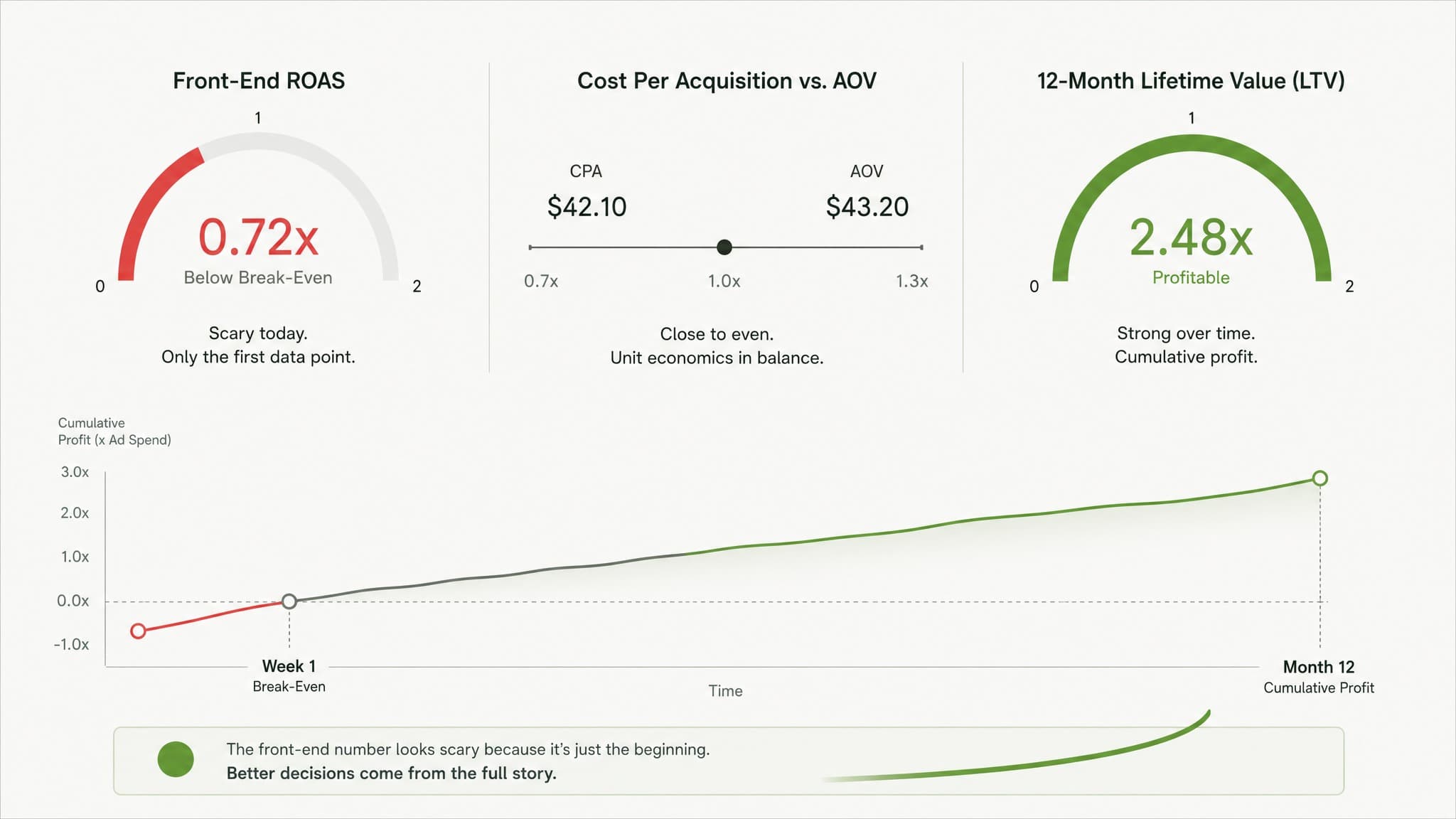
Dashboard comparing front-end ROAS against lifetime value over twelve months.
Do not judge the campaign on that number alone. Vape, disposables and carts are repeat-purchase products. Front-end ROAS is just the price you paid to acquire a customer this week. It is not a verdict on the business. The numbers that actually decide whether you are winning are cost per acquisition measured against your average order value and, above all, lifetime value. A first order that breaks even and then prints on every reorder for a year is a winner, and the dashboard number that scared you was never the real story.
If you want to run your own figures instead of trusting a platform's front-end math, put them through the ROAS calculator and look at what a customer is actually worth over twelve months, not twelve days. For context on what this looks like at scale, brands we run have printed real numbers this way. Lit Farms, a cannabis client, cleared 2.26x blended ROAS across roughly 330,000 dollars in tracked revenue, built on exactly this separation of a warmed account, compliant creative and a page that converts.
Where this leaves you
Vape advertising on Meta is not a locked door. It is a restricted one, and restricted means there is a way through if you understand the machine you are dealing with. The account underneath the ad matters more than the ad. The word matters more than the picture. The page does the selling the ad is not allowed to do. And the number that scares you on day fourteen is usually not the number that decides whether you win.
That is the shape of it. The infrastructure and the judgement calls that make it run reliably, month after month, are the part that takes years to build and is genuinely hard to do alone. If you would rather have a team that already runs this every day, take a look at the industries we advertise for and let's talk about what your accounts should actually look like.
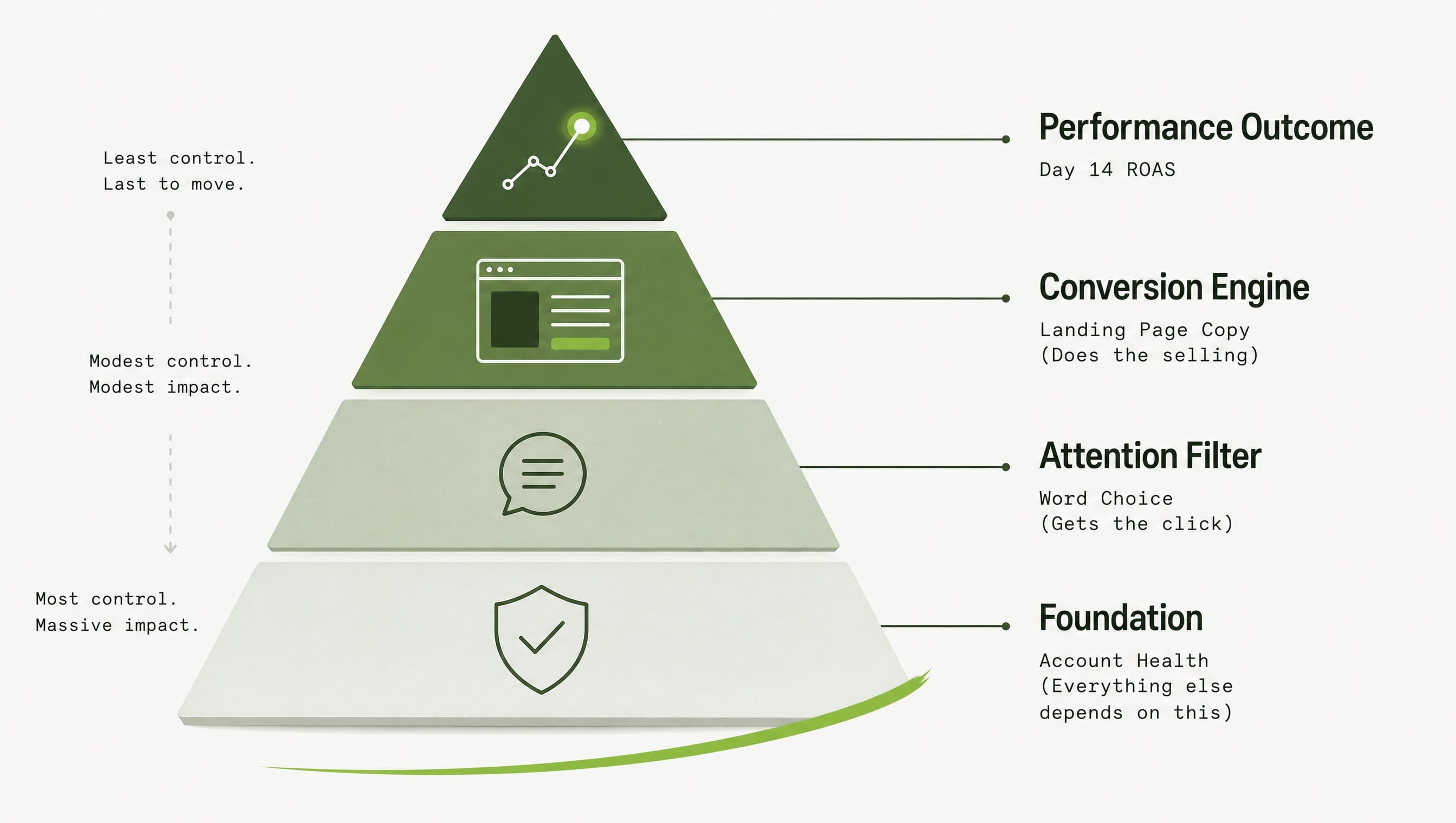
The hierarchy of what actually drives vape ad performance on Meta, from account foundation to metrics.